Why your sales figures are lying to you
Jul 17, 2026
Why your sales figures are lying to you
Every year, more than 1,300 new food and drink products land on UK retailer shelves. And according to Nielsen's Breakthrough Innovation Report, 76% of them quietly disappear. That's not a rounding error. That's nearly four out of every five products that founders poured their savings, their energy, and their entire vision into, gone within a year.
I've spent over ten years working with food and drink brands at every stage of their journey, and I genuinely believe the reason for this failure rate is far more specific, and far more fixable, than most people want to admit.
The question most founders are not asking
When I ask a food or drink founder how their product is doing, the conversation always starts the same way. They tell me about their total sales figures, their distribution numbers, how many stockists they're listed with. And those things do matter.
But there is a question that matters much more, and most founders are not asking it. Not "how many people bought my product?" but "how many came back to buy it again?"
That distinction is everything. The first purchase is a trial, it can happen because of curiosity, a good shelf placement, a promotional offer, or a friend's recommendation. The second purchase is a decision. That's someone who tried your product, thought about it, and actively chose to spend their money on it again. That is the real signal.
The metric that captures this is your repeat purchase rate. And if you're not tracking it, you genuinely don't know how your product is performing.
If you're already wondering whether your repeat purchase rate might be telling you something uncomfortable, I offer a free discovery call where we can look at this together, no pitch, just an honest conversation. Book yours here.
This is what retailers actually look at
In 2016, Tesco launched what they called Project Reset, the largest range rationalisation in their history. They were cutting 15% of their listed products per year, over three years. The University of East Anglia ran a study directly with Tesco to understand exactly how those decisions were being made.
What came out of that research was unambiguous. It came down to two metrics: customer penetration and repeat purchase rate. That was it.
This completely aligns with what I hear at food industry events, particularly when I'm sitting in the room while founders pitch to buyers. Buyers ask a lot of technical questions, but the one that comes up consistently is: "What is your repeat purchase rate?" And Tesco is not unique here.
Cana, one of the leading FMCG data companies, calls the repeat purchase rate "the most fundamental metric" when it comes to your relationship with a retailer. McKinsey's research on high-performing food and drink brands shows that best-in-class brands hit between 60 and 70% repeat purchase rate versus their category average.
Once you've been delisted, getting back on shelf is extremely hard. It's not impossible, but the window closes fast, and once it's happened, it's very hard to come back from.
This applies online just as much as in retail
If you're selling online, whether on your own website, through Amazon, or anywhere else, the same logic applies. Your algorithm rankings, your customer acquisition costs, your entire business model depends on people coming back.
A high acquisition rate with a low repeat rate means you're spending money replacing customers as fast as you lose them. And the honest truth is, once a consumer has decided your product isn't worth a second purchase, they very rarely change their mind. They move on to one of your competitors.
So what actually drives repeat purchase?
This is where the research becomes genuinely fascinating. Across multiple studies, multiple markets, multiple product categories, the answer is always the same.
It's taste.
Mintel's UK Food and Drink Influences Report published in 2026 states that "taste leads in food and drink choices" and that "good taste is non-negotiable, even for those under financial strain." Attest surveyed 1,000 UK consumers about functional drinks and found that 92% ranked taste as either important or very important, the highest score of any factor tested, above price and health claims. Hodi's research is equally clear: 85% of consumers prioritise taste over price and healthfulness when deciding what to buy again.
And yet one of the most common things I hear from food and drink founders is: "If my product is selling, it must taste good." That's a misbelief worth challenging directly.
Health benefits, a strong brand, good shelf placement, those things drive trial. They're excellent at getting someone to pick your product up for the first time. But taste is what brings them back. And your repeat purchase rate is ultimately the verdict.
Flavour is not a commodity
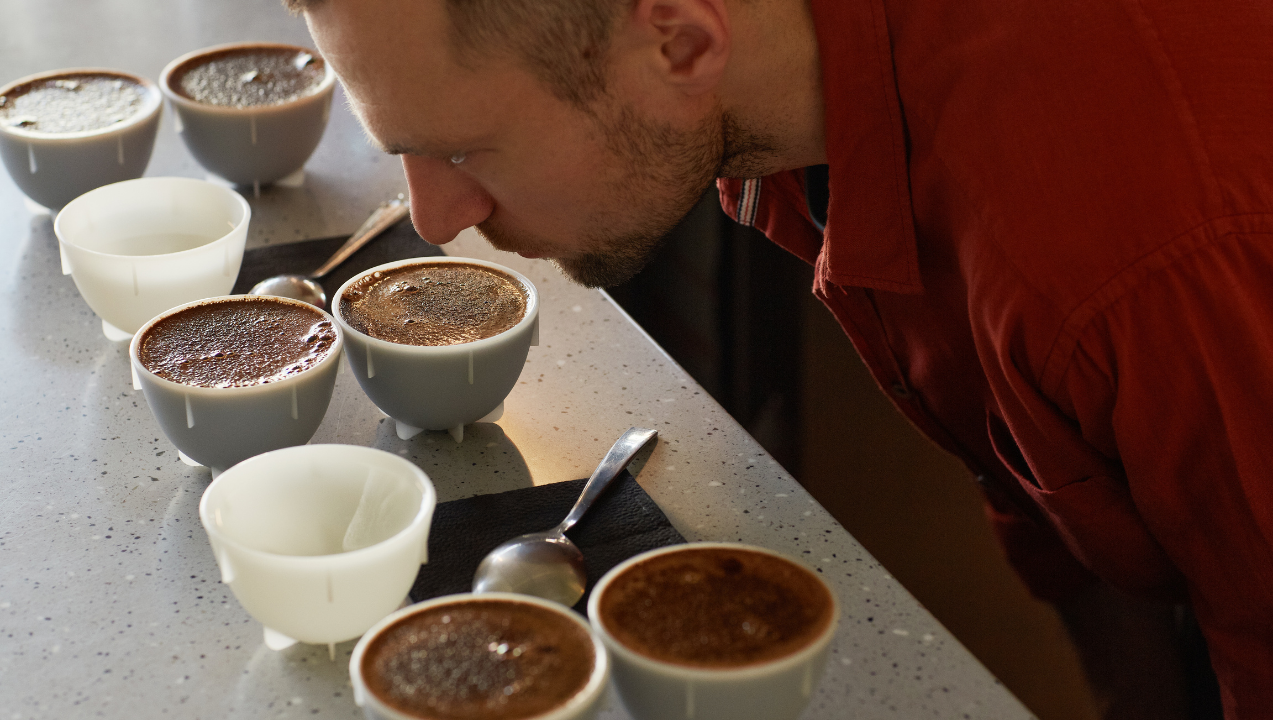
Flavour is often treated almost as an afterthought in product development. Of course it tastes good, it's a food product, right? But it's genuinely not that simple. When you have as many competitors around you as most UK food and drink brands do right now, even a small imperfection in taste will change things.
It doesn't have to be catastrophic. Your product doesn't have to taste bad. It just has to taste slightly less exceptional than the alternatives sitting next to it on the shelf. An off-note here, a batch inconsistency there, these are the kinds of things that quietly erode your repeat purchase rate before you even realise what's happening.
By the time the decline in your numbers becomes impossible to ignore, you're already in a difficult position with your retailer.
What to do right now
Go and find your repeat purchase rate. Is it close to that 60–70% benchmark? If it isn't, ask yourself one honest question: does my product taste as extraordinary as it could, for the specific people who are actually buying it?
Not as healthy, not as well-branded, not as convenient or affordable. As tasty as it could be, for your target consumer.
Flavour strategy is not a luxury reserved for brands with deep pockets. It's the difference between building something lasting and slowly watching your listing disappear. And the good news is, taste problems are fixable, when you know where to look.
If you want to understand exactly where your product stands on taste and what it would take to improve your repeat purchase rate, that's precisely what I can help you with. Book a free discovery call and let's talk it through.