Why fixing flavour starts with the right diagnosis
Jun 19, 2026
Most food and drink founders who reach out to me already know something is wrong with their product. They can feel it in their sales data, in the reviews, in the silence of consumers who bought once and never came back. What they often don't know is which problem they are actually dealing with.
And that distinction matters more than anything else. Because not all flavour problems are the same, which means the fix will never be the same either. The action you need to take depends entirely on which of the three problems you are facing. So the diagnosis comes first.
The three flavour problems that quietly kill repeat purchases
Over the past few episodes on the Food Lab podcast, we've been going deep into the repeat purchase rate and why taste sits right at the centre of it. We covered three specific issues that can quietly destroy it at the flavour level: consistency drift, the cravability gap, and off-notes from functional ingredients.
Each one has its own fingerprint. And each one needs a completely different response.
When the problem is consistency drift
If consumers were satisfied with your product and now they're not - and nothing on your end has obviously changed - this is almost always a consistency issue.
The first place to look is your sign-off lab sample. This is the sample you approved before handing your recipe to your contract manufacturer, and it should be your reference point for every batch that follows. The question to ask is: how closely does your current production match that sample?
A lot of brands I work with have that realisation during industrialisation. They thought the differences between the lab sample and the production run would be minor. They didn't anticipate how significant the gap could be.
And changes don't only happen at industrialisation. A supplier switch, a different ingredient batch, a newer machine - any of these can shift your product entirely. I had that with a client whose procurement team changed the cocoa powder because on paper, the two products looked identical. Same spec, just one was cheaper. Nobody tasted them side by side beforehand, and they only realised something was completely off when they tested against the reference during production.
That's why knowing your product "tastes good" is not enough. You need detailed sensory data: the sweetness level, the bitterness, the mouthfeel, the key flavour notes, all documented accurately. Without that foundation, spotting a drift becomes guesswork, and tracing it back to a cause becomes nearly impossible.
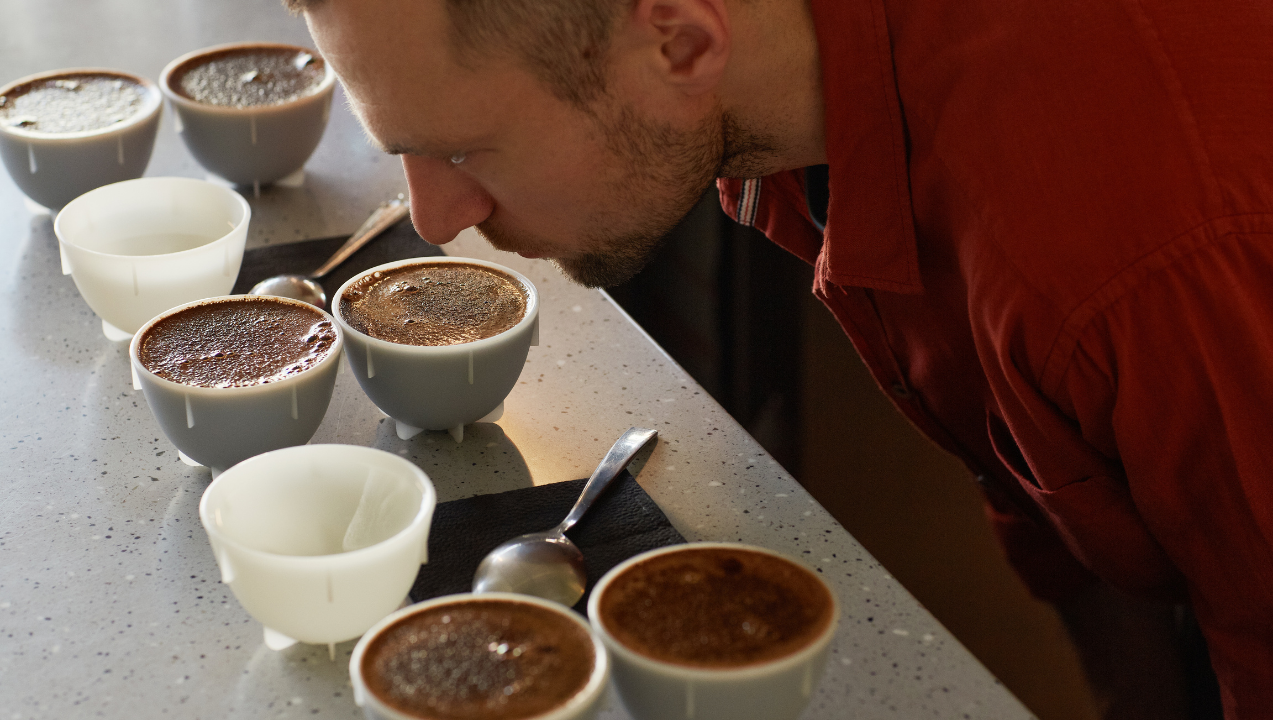
Training your team to taste accurately matters just as much. I've had clients send me two samples, convinced their production team noticed no difference, and I could immediately pick up a shift. If the people tasting your product during production can't articulate the difference between batches, that doesn't mean consumers won't notice. They will.
When the problem is cravability
This one is more subtle. Your product tastes good. People say they enjoy it. But they only buy it once.
What's missing is cravability: the ability to create a flavour experience so memorable that the brain stores it and wants it again. Think about the snacks you genuinely can't stop eating - whether it's chocolate or crisps. That's not accidental. Every bite creates a memory because the experience is so good, and your brain wants it again. The next time you're in the supermarket, it remembers. If the experience is pleasant but not memorable, the brain simply moves on.
A flat flavour profile is usually the culprit here. Flavour should move through a sequence, a bit like music: you have a start, maybe a slow start, maybe a bam start, and then ups and downs throughout. Think of a film - if it was always the same without any tension or excitement, it would be a very boring film. Flavour works exactly the same way.
In practice, this means having top notes that are volatile and come first, usually the bright fruity notes. Then your base notes, heavier and rounder - things like caramel. And then everything that lingers on the finish after you swallow.
Rather than landing on "a strawberry flavour," ask yourself deeper questions. What type of strawberry? Confectionery? The next layer - a little bit creamy, a little bit jammy, a little bit unripe? Keep digging. The more accurately you can describe the flavour profile you're looking for, the better your flavour supplier or co-manufacturer can respond. This is something I work through with clients during a flavour workshop, but you can start this exercise on your own right now.
When the problem is off-notes from functional ingredients
If you're working with adaptogens, plant proteins, marine collagen, or botanicals, these ingredients come with their own very distinctive taste. Earthy. Bitter. Fishy. Cardboardy. And no matter how good the rest of your product is, those off-notes will surface.
The first step is masking. Flavour suppliers offer masking flavourings designed specifically for this: bitterness maskers, stevia maskers, sweetness enhancers, plant protein maskers. A creamy vanilla can work by distracting the brain rather than directly covering the off-note. Burnt sugar notes can help too. Menthol works particularly well alongside marine collagen.
But masking alone won't get you there - and I know this because I worked with a client on a marine collagen product who had tried only masking flavourings. When I tasted them, each one created a different problem. Consumers said the same: one batch was described as "too weird." You can understand why.
The approach that actually worked was flavour pairing: finding a flavour that works alongside the off-note rather than against it. A classic pea and rice protein blend is typically earthy, bready, a little cardboardy - almost like a rye bread, sometimes with nutty, roasted notes. Chocolate and caramel share those characteristics, which is why they complement plant protein far better than blueberry or strawberry ever would.
And the final layer that's often forgotten: something to round out the whole profile. Something creamy that softens the harshness, especially when your base is earthy or botanical. It doesn't mask the off-note directly, but it makes the overall experience far less harsh.
I'll also be honest: I've tried dozens of flavour combinations in trials where things got even worse than without any flavour at all. It takes time. But the structure - mask, pair, round - is the right framework to follow.
If you're working through a specific off-note challenge and not sure where to start, this is exactly what we dig into together. Book a discovery call and let's look at what's actually happening in your product.
The diagnosis is the most important step
A customer who buys your product once has around a 25% chance of buying again. Get them to a second purchase, and that jumps to 50%. The compounding effect is where a food or drink business actually becomes sustainable.
So before you tweak your formula or fire off a new brief to your flavour supplier, sit with your consumer data and ask honestly: which of these three problems is most likely playing out in my product right now?
Is it a consistency drift? Then look back at ingredient switches and production changes. Is it a cravability gap? Then look at the complexity and layering of your flavour profile. Is it an off-note issue? Then start with masking, move to pairing, and always get someone honest outside your team to taste it.
Once you have the right diagnosis, you'll know exactly where to focus. And if you'd like a professional perspective before you start making changes, that's what I'm here for. Book a discovery call and we'll get specific about your product, your data, and your next step.