The honest truth about developing a plant-based barista drink
Jul 24, 2026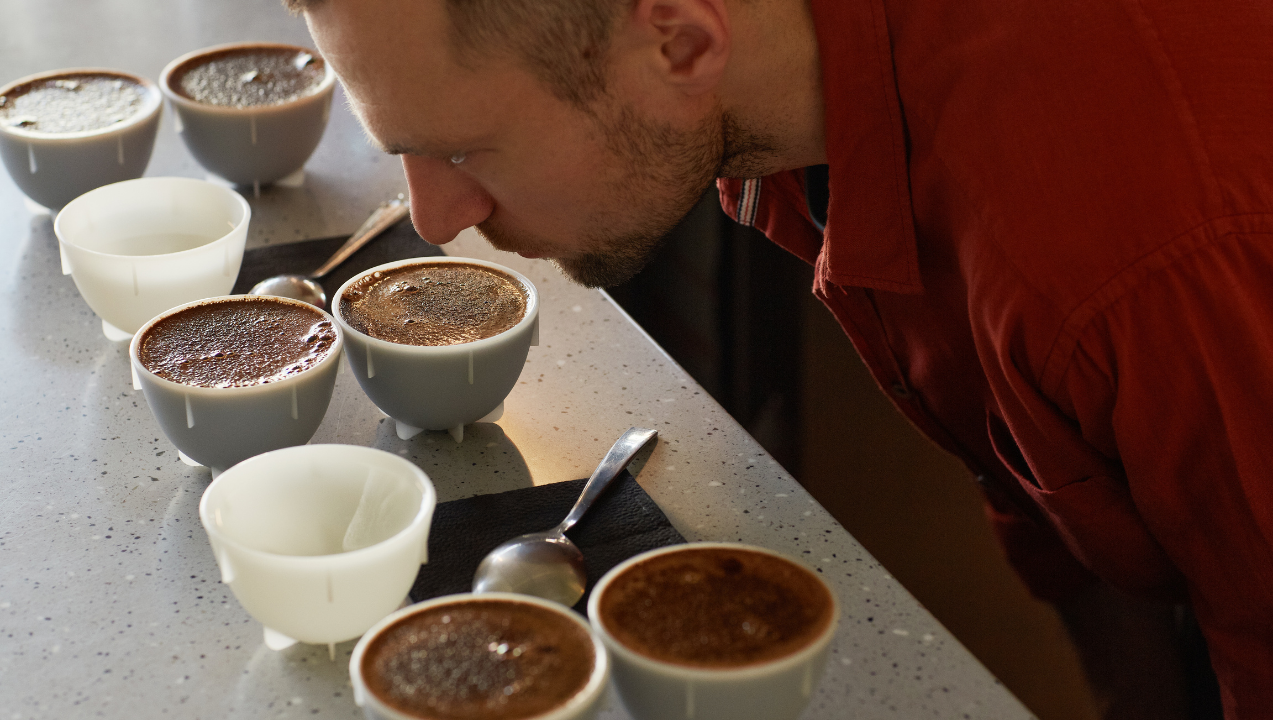
The brief that removed most of the usual tools
My client was already running a successful allergen-free, vegan cookie brand. She wanted to extend her range into a plant-based barista drink. Clean label. Allergen-free. No seed oils. No added sugar. No stabilisers, no xanthan gum, no guar gum, no lecithin. Nothing that wasn't there for a very good reason.
Here's what made that brief almost impossible to work with: look at the plant-based barista drinks already on the market. Every single one of them uses at least one of those ingredients. Those additives exist because they solve real problems, foam stability, texture, shelf life. Remove them, and you remove most of the tools a food scientist would normally reach for first.
So right from the start, we were working with one hand tied behind our back. Which is exactly why I said to my client upfront: I think I can do this, but I won't overpromise, the more constraints you have, the harder and longer this is going to be.
Before any trial, a workshop
The very first thing I did was organise a product workshop. We met in London, in a coffee shop, and I turned up with a luggage full of twelve different plant-based barista drinks. We tasted them all on their own. Then we tasted them all with coffee.
Only a handful were actually enjoyable either way. Most were neither good on their own nor good in coffee. And that gap was exactly what my client wanted to close, she didn't want a product people pour into their coffee because they're vegan or lactose intolerant and have no better option. She wanted something people would genuinely look forward to.
That workshop gave me a clear direction. Not a hazelnut flavour, not a vanilla flavour. A subtle hint of something, slightly roasted, slightly caramellic, that enhances the whole experience of drinking a flat white or a latte without overpowering the coffee itself. Buttery notes were immediately off the table. Finding that balance turned out to be one of the most interesting parts of the entire project.
The foam challenge nobody warned me about
My first instinct with the foam was simple: make it foam as much as possible. And I achieved that. The problem? When we went to our first barista tasting session and asked for honest feedback, the barista told me, very directly, that my foam was more like a bubble bath.
Big bubbles. Unstable. Beautiful quantity, completely wrong quality for latte art. He explained that to get the right foam for a proper flat white or a latte, I needed to increase the fat content in the formulation. More fat means smaller bubbles, a creamier texture, and a foam fluid enough to pour cleanly. It wasn't the quantity of foam that mattered, it was the quality. That was a pivotal moment.
And I hadn't even got to the protein problem yet.
When protein meets acidity
Here's something most people don't think about when they're developing a plant-based drink: plant-based protein is sensitive to acidity. When it meets the acidity of coffee, it can curdle, essentially turning into tiny scrambled eggs inside your cup. You couldn't really taste it, but you could see it clearly. Separation. Protein settling at the bottom. It looked revolting, and no one would want to drink it.
The solution was an acidity regulator, something that gently raises the pH of the drink to protect the proteins from the coffee's acidity. But every acidity regulator has its own taste. Some were metallic. Some tasted like bicarbonate of soda. Some tasted genuinely chemical. Finding one that worked technically and tasted acceptable took a long time.
This also meant having an honest conversation with my client. An acidity regulator is an additive. It isn't strictly clean label. But without it, the product simply didn't hold together. We agreed to include it, knowingly, for a clear reason, and with full transparency. That kind of informed compromise is completely different from just reaching for additives out of habit.
The six months I shouldn't have spent
Midway through the project, I made a mistake I now tell every client about from the start. I spent about six months trying to source suppliers with small minimum order quantities for each ingredient. When you're working with a startup, MOQs matter enormously, if you use an ingredient at 0.1% and the minimum order is 25 kilos, that's years of stock.
The problem is that most contract manufacturers already work with their own established suppliers, at their own pricing and quantities. They won't necessarily accept yours. So all that time I spent finding small MOQ suppliers was largely redundant.
What I do now is work in parallel. I develop the prototype in the lab while my clients start early conversations with contract manufacturers, not to commit to anyone, but to ask the right questions from the very beginning. Lead times. Minimum order quantities. Storage and distribution. And the question that matters most of all: who owns the intellectual property of your recipe?
That last one matters far more than most founders realise. At the Nourish conference organised by the Tastebuds Collective, I spoke to a drink founder who had lost £20,000 because her first contract manufacturer kept the IP. When she wanted to move on, she had to buy her own recipe back. Read the contract. Ask the question directly.
The pilot plant partner who lied
This is the part of the story I want to be completely honest about.
Our first pilot plant partner told us they had all the equipment and all the knowledge to handle a plant-based barista drink. No problem at all. It turned out to be complete nonsense. When we arrived, the equipment wasn't suitable, health and safety was questionable, and when things went wrong, which they did, immediately, they blamed my formula. No lecithin, no guar gum, no stabilisers. That was apparently the problem.
We didn't produce a single usable drop of product that day. What came out of the tank was brown instead of the expected cream colour. My client looked at my face and asked if that was normal. It wasn't. She was refunded 50% of the day. For me, that was a scam.
If you're currently looking for a product development partner or a pilot plant to work with, go and visit the facility before you commit to anything. Ask for proof of similar projects they've completed. Don't trust a list of capabilities. If I had visited that site myself beforehand, I would have spotted the problems immediately.
This is also why, if you're at this stage and you want a second opinion on how to approach it, booking a discovery call costs you nothing. Having the wrong partner at this point costs you a lot.
The university, the PhD, and the additive argument
Our second pilot plant partner was a different experience entirely. A British university. A food scientist with a PhD and years of experience specifically with plant-based drinks. The right equipment, homogeniser, pasteurisation, sterilisation. Exactly what we needed to bridge the gap between lab scale and contract manufacturing.
But even there, we had a battle to fight.
The fat in our formulation was solid at room temperature. When it hit a cold temperature during processing, it wanted to solidify again and separate from the rest of the product. The food scientist's immediate response was: add lecithin. Add guar gum. Add stabilisers.
I said no. We tried them anyway, because at a certain point, you have to let someone prove their point so everyone can move forward. The product didn't change. It just turned slightly green. Oh my god.
The actual solution was straightforward: change the fat to one that remained liquid at every temperature. That was all it needed. No additives. The product came out perfectly homogeneous, exactly the right colour, exactly as it had looked in my lab. Even the food scientist admitted it didn't need any of what he had been pushing for.
Additives are not always the answer. Sometimes the answer is in the process. Sometimes it's in the ingredient itself. But you have to be willing to keep looking, even when the people around you are convinced they already know what's wrong.
There is always a solution
186 trials. A foam like a bubble bath. Protein curdling in hot coffee. A pilot plant that wasted a full day and part of the budget. Six months of supplier research that didn't transfer. A food scientist who kept defaulting to additives that didn't work. And still, we got there.
The product is stable. It passes pasteurisation and sterilisation. Every ingredient in that recipe is there for a reason. No fillers. A clean label plant-based barista drink that nobody believed was achievable when we started.
The struggles are not a sign that something is wrong. They are part of it. You cannot avoid them. But you can focus on the solution rather than dwelling on the problem, and you can make sure the people around you are doing the same. There is always a solution. You just have to find the right partner: someone who genuinely understands your vision, who is honest about what they can and can't do, and who will keep going until it works.
If you're developing a product right now and you're hitting walls you didn't expect, book a discovery call and let's talk about what you're working on.