Repeat purchase rate: the truth about food brand failure
May 29, 2026
1. 76% of new UK food products fail. The reason might surprise you.
Every year, more than 1,300 new food and drink products hit retailer shelves in the UK. And according to Nielsen, 76% of them quietly disappear within a year.
Not with a dramatic recall. Not with a PR crisis. They just... fade out.
I've spent over 10 years working in the food industry, and I've watched this happen to brands that genuinely had brilliant ideas. Products with beautiful packaging, compelling health claims, real investment behind them. And yet, gone.
There's a very specific reason why. And it has nothing to do with how good the original idea was.
2. Getting listed is not the finish line
Here's something I hear from food and drink founders quite regularly: "We got listed. The hard part is done."
I completely understand where that feeling comes from. Getting into retail is genuinely hard. It takes months of preparation, pitches, samples, negotiations. You should feel proud when it happens.
But getting listed is the starting point, not the finish line.
If you're preparing to launch a new product, or you've recently secured a listing and want to protect it, this is the conversation worth having now, before the numbers start telling you things you don't want to hear.
3. The question that changes everything
Most food and drink founders measure success the same way: overall sales, distribution numbers, how many stockists they've got. Those things matter, of course. But they're not telling you the full story.
Here's the question that actually counts: not "how many people are buying my product?" but "how many people are buying it again?"
Because that second purchase is a completely different thing to the first. The first purchase can be explained by curiosity, a good shelf placement, a promotion, or a recommendation from a friend. The second purchase is someone who tried your product, thought about it, and actively decided to spend their money on it again.
That's the real signal.
4. The metric retailers are already watching
In 2016, Tesco launched what they called Project Reset, the largest range rationalisation in their history. They cut 15% of their listed products per year, over a period of three years.
The University of East Anglia ran a study directly with Tesco to understand exactly how those delisting decisions were being made. What did they find? It came down to two metrics: customer penetration and repeat purchase rate.
That's it. Two numbers.
Tesco is not unique in this. Kantar, one of the leading FMCG data companies, calls repeat purchase rate "the most fundamental metric" when it comes to your relationship with a retailer. McKinsey's research on high-performing food and drink brands shows that the best-in-class are hitting repeat purchase rates of 60 to 70%. Do you know yours?
5. Your sales figures might be misleading you
This is where things get uncomfortable. And I'm going to say it plainly, because I think it matters.
A lot of food and drink founders believe this: "If my product is selling, then it must taste good." It's a completely understandable assumption. But it's wrong.
Strong branding, a health benefit, a brilliant shelf position: these things drive the first purchase. They create the trial. But taste is what brings people back, and your repeat purchase rate is ultimately the verdict.
Once a retailer delists your product, getting back onto those shelves is not impossible, but it is extremely hard. And this isn't just a retail problem. If you're selling online, through your own site or Amazon, your algorithm rankings, your customer acquisition cost, your entire business model depends on people coming back. A high acquisition rate paired with a low repeat rate means you're spending money to replace customers as fast as you lose them.
6. The research that keeps saying the same thing
Across multiple studies, multiple markets, multiple product categories, the answer is always the same. Taste is the number one driver of repeat purchase.
Mintel's UK Food and Drink Influences Report 2026 is unambiguous: taste leads in food and drink choices, non-negotiable even for consumers under financial strain. Attest surveyed 1,000 UK consumers on functional drinks and found that 92% ranked taste as the most important factor, above price, above health claims. And Hodi's research puts the final number on it: 85% of consumers prioritise taste over price and healthfulness when deciding what to buy again.
It's true across every category: soft drinks, snacks, functional foods. The data is consistent, and honestly, it makes complete sense when you think about it.
7. The part nobody talks about openly
Flavour is usually treated as an afterthought in this industry. "Of course it tastes good," founders tell me. "Our co-manufacturer handles that."
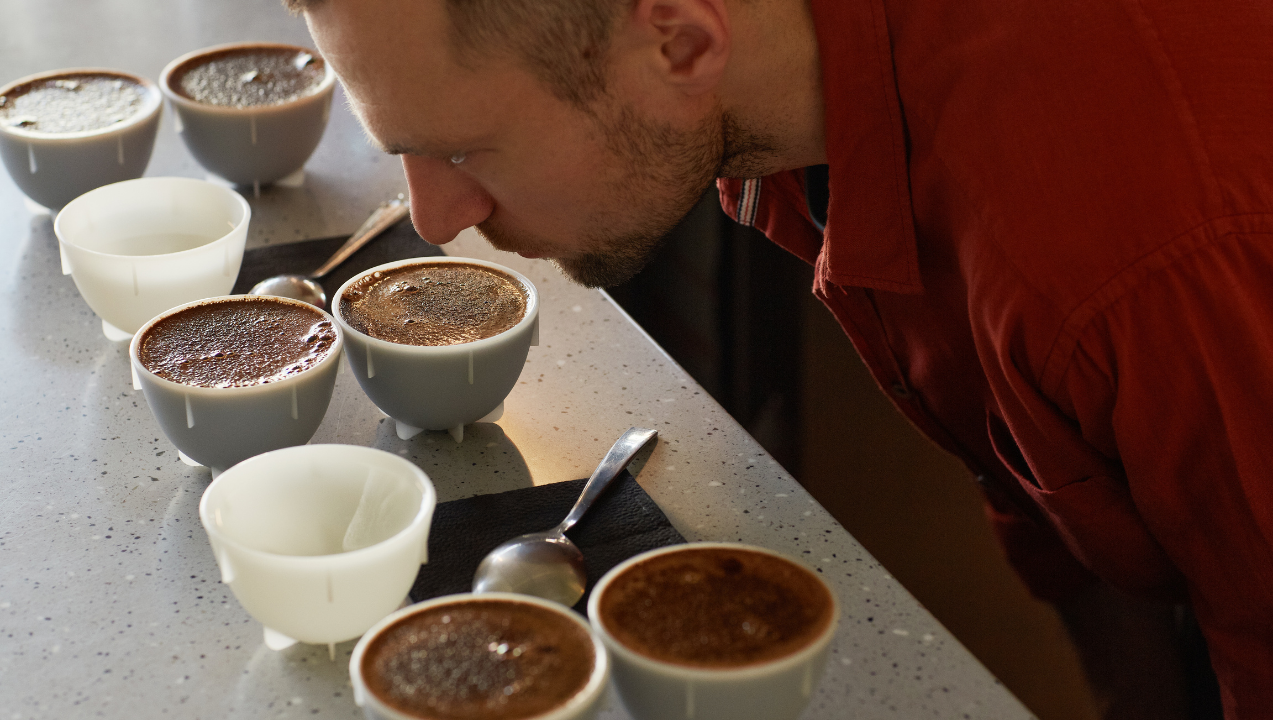
But here's what I know from running up to 200 trials per project: flavour is far more complex than most people realise. And it doesn't need to be catastrophically bad to quietly damage your repeat purchase rate. It just needs to not be great.
An off-note appearing inconsistently across batches. A slight bitterness from a functional ingredient that nobody addressed properly. A flavour that tastes fine in isolation but doesn't hold up after the first sip. These things change everything when you have competitors sitting right next to you on the same shelf.
If you're launching a product with challenging ingredients, adaptogens, plant proteins, marine collagen, getting the flavour right before you hit retail is non-negotiable. My Choose Package is a structured, science-led process to help you find the right flavour direction, so your customers actually want to come back for a second purchase. Book a free discovery call if you'd like to explore it together.
8. So, what's your repeat purchase rate?
Here's a challenge worth taking seriously this week. Go and find your repeat purchase rate. Is it close to that 60 to 70% benchmark that McKinsey identifies for the best-performing brands?
If it's not, ask yourself one honest question: is my product's taste as good as it could be for the people who are actually buying it? Not as healthy, not as well-branded, not as conveniently packaged. As tasty as it could be.
Because if the answer gives you even the slightest pause, that's worth paying attention to.