The honest truth about developing a plant-based drink
May 08, 2026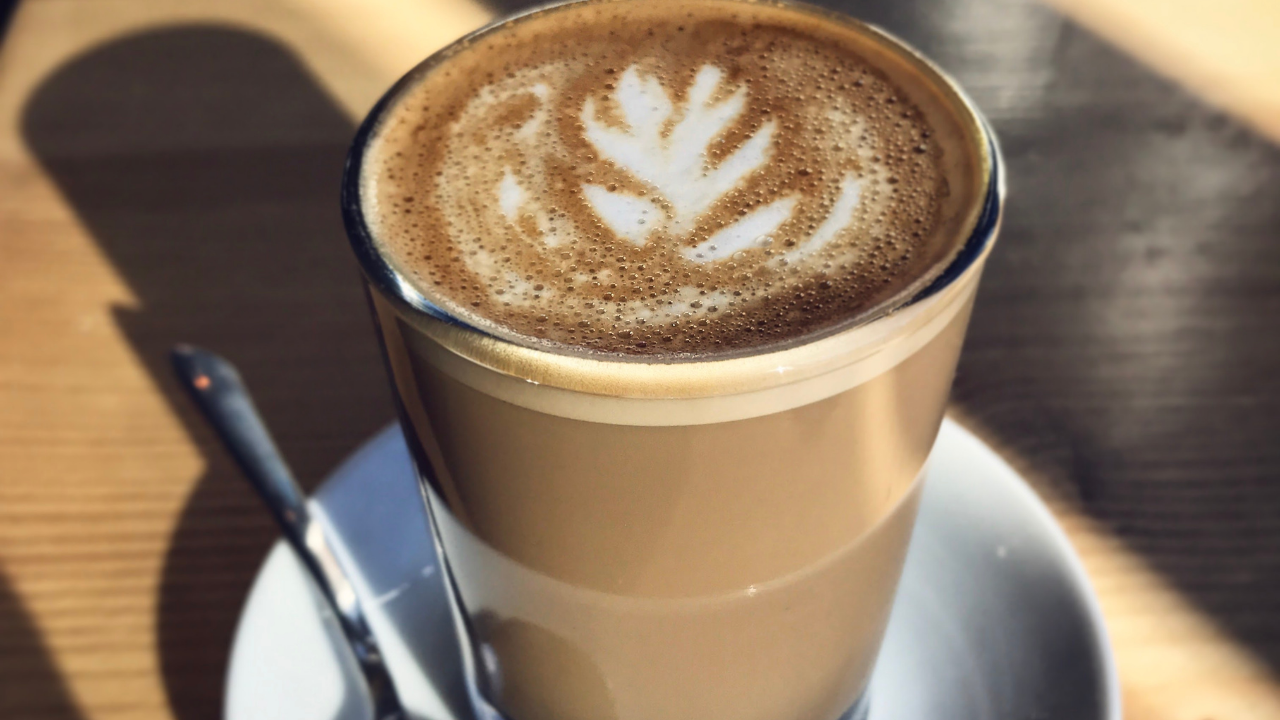
186. That is the number of trials it took to get this product right.
I know what you are thinking. That is absolutely insane. But when you are developing a plant-based barista drink from scratch with a clean-label brief, no allergens, no seed oils, no stabilisers, and working with a client who knows exactly what she wants, that number makes complete sense. By the end of this post, I hope it will make sense to you too.
Because if you are developing a drink product right now, or thinking about it, this is the honest version of what that journey actually looks like.
1. The brief that removed all the shortcuts
My client was already running a successful allergen-free and vegan cookie brand. She wanted to extend her range into a plant-based barista drink. The brief was clear: clean label, allergen-free, no seed oils, no added sugar, no stabilisers such as guar gum or lecithin.
Here is what that means in practice. Look at every plant-based barista drink on the market and almost all of them have at least one of those ingredients. They are not bad for you. They are just the shortcuts food scientists reach for to achieve foam stability, texture, and shelf life.
We removed all of them from the start. That is not a small decision. Those ingredients are there for a reason, and taking them out means solving every problem they would have handled through something else entirely.
2. Where every product development should start
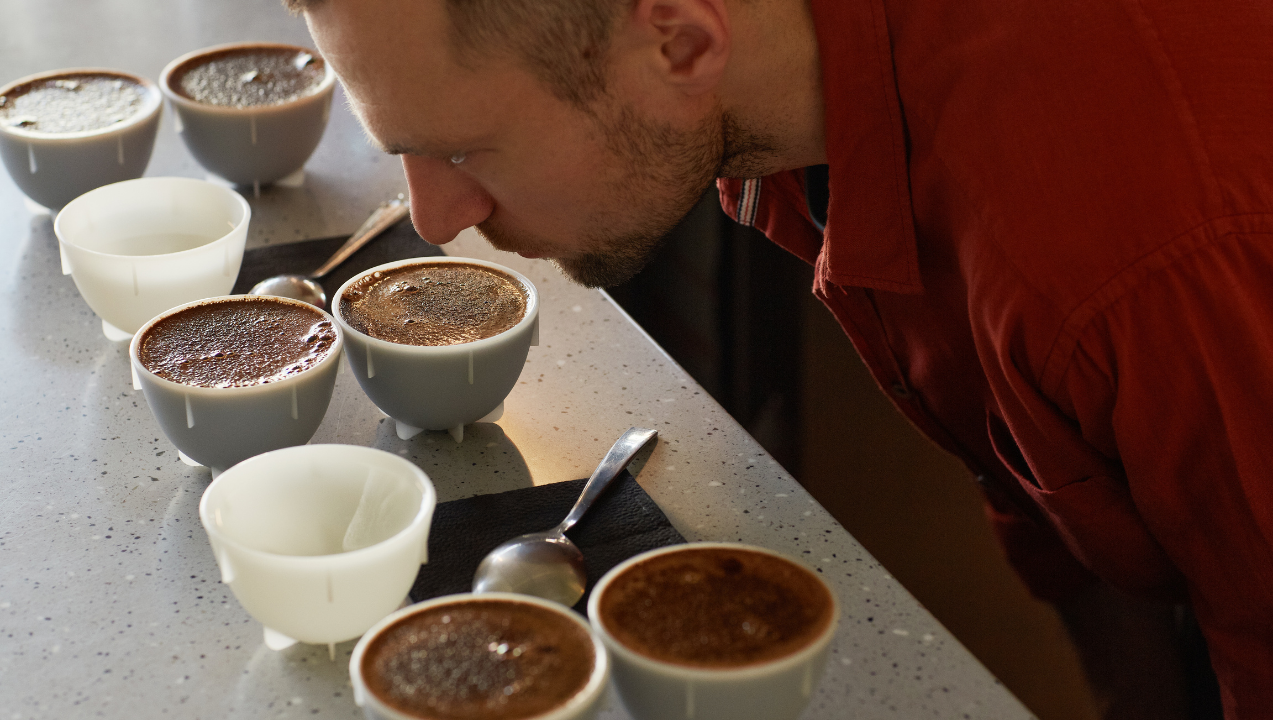
Before I touched a single formula, I organised a product workshop. I packed twelve different plant-based barista drinks into a bag, travelled to London, and met my client in a coffee shop.
We tried every single one on its own and then with coffee. Most of them, to be honest, were neither particularly good on their own nor good with coffee. But that session gave me something no brief on paper could: a clear, shared sensory direction.
We knew what we were building towards. We knew dairy milk would always win on creaminess, and we were not going to pretend otherwise. But we had benchmarks, a direction, and a set of shared references that made every decision that followed faster and more focused.
3. The flavour challenge nobody talks about
My client did not want a hazelnut coffee or a vanilla latte. She wanted something far more interesting: a flavour enhancement so subtle you cannot quite name it, but one that makes the whole experience of drinking a flat white or a latte feel noticeably better.
That kind of brief is actually harder to execute than a recognisable flavour. I spent a significant portion of those 186 trials exploring what would pair well with different types of coffee without overpowering it. Anything slightly spicy, caramellic, roasted: interesting territory. Buttery: an absolute no-go. We agreed on that very quickly.
4. The foam moment no one warned me about
A plant-based barista drink has to foam. That part I knew. What I did not fully appreciate was how specific the requirements are when the product is going directly to coffee shops and baristas.
My first attempt foamed brilliantly. I was pleased. The barista was not. He told me, very directly, that my foam was like a bubble bath: big bubbles, unstable, impossible to work with for a proper latte or flat white. What he needed was smaller, finer bubbles and a foam fluid enough to pour at speed during a busy rush.
The solution was increasing the fat in the formula. Not more foam. Better foam. It is one of those moments where you realise that working directly with the people who will actually use your product is not optional. It is essential.
Six months I will never get back
This is the mistake I am most transparent about with every client I work with now, because it cost us six months.
I spent that time finding suppliers with small minimum order quantities that fitted the brief. Tracking down ingredients at manageable quantities and reasonable costs, some vitamins alone came in at £2,000 a kilo. What I had forgotten is that contract manufacturers already have their own suppliers, their own pricing, their own preferred ingredients. Most of the sourcing work I was doing would be undone the moment we arrived at the contract manufacturer.
My recommendation now to every client: contact your contract manufacturer early, in parallel, while the product is still being developed at lab scale. You do not need a finalised recipe. But you do need to be asking the right questions from the start.
5. The pilot plant disaster
Before going to a contract manufacturer, most products need pilot plant trials. This is where you test your recipe at a larger scale, with industrial equipment, before committing to full production.
Our first pilot plant partner told us they had the equipment, the expertise, and experience with plant-based barista drinks. None of it was true. The machines were unsuitable, and when the product came out of the tank, it was brown. My client saw my face and asked if that was the normal colour. It was not. We could not produce anything that day. She was refunded 50% of what she had paid. I am going to say it plainly: it was a scam.
The lesson I took from it is this: go and see the facility yourself before you commit. Do not rely on what people tell you they can do. Ask for proof, ask about similar projects they have worked on, and see the equipment with your own eyes. Some people will say anything to get your business.
We found the right partner the second time: a British university food science department, a PhD-level scientist with years of plant-based drink experience, and every piece of equipment we needed. That is the standard worth holding out for.
6. Additives are not always the answer
At the university, we hit our most stubborn challenge. The fat in the formula was not blending properly. It was separating.
The food scientist's instinct was immediate: add lecithin, add guar gum, add stabilisers. Every time something did not work, the answer was additives. We tried them. Nothing changed. One of them turned the product green.
The actual solution had nothing to do with additives. The fat we were using was solid at room temperature, and when it met cold liquid, it wanted to solidify again. We changed the type of fat to something that stayed liquid regardless of temperature. Everything worked. Immediately.
When you have a clean-label vision and your partner keeps reaching for additives as the default answer, push back. You need someone who understands why your brief exists, not just what it says.
7. The £20,000 lesson
At the Nourish conference organised by Tastebuds Collective, I spoke to a founder who had lost £20,000 because of one clause she had not read carefully enough in her contract manufacturer agreement. Her co-manufacturer had retained the intellectual property of her recipe. When she tried to move to a different manufacturer, they refused to release the formulation without payment.
Before you sign anything with a contract manufacturer, make sure you know who owns the recipe. Make sure it is you.
8. This is what it actually takes
At the end of those 186 trials, we had a product with a minimal ingredient list where every single ingredient had a reason to be there. No fillers, no unnecessary additives, no compromise on the vision except for one acidity regulator the proteins genuinely needed.
Product development is not linear. There are problems you cannot anticipate, partners who let you down, and months that do not go to plan. What makes the difference is having someone alongside you who believes in your brief, challenges the shortcuts, and keeps looking for the solution rather than the easy way out.
If you are in the early stages of developing a functional or plant-based drink and you are wondering whether to bring in expert support or rely on your co-manufacturer to guide the process, I hope this story gives you a clearer picture of what is actually involved.
The best place to start is a conversation. Book a discovery call here.