Good taste is not enough: the science of repeat purchase
Jun 12, 2026
Your product tastes good. So why won't people come back?
Your product's getting tried. The reviews are mostly positive. Your team tastes it regularly and agrees it's good. The launch went well, the initial sales came in. And yet, the repeat purchase rate is nowhere near where it should be.
So naturally, you start questioning everything else. The packaging needs a refresh, maybe. The price point's too high. The marketing isn't reaching the right people. Because if the taste is genuinely fine, the problem must sit somewhere else, right?
This is the exact assumption I want to challenge today. The belief that good taste equals repeat purchase is one that quietly costs food and drink founders a significant amount of money, and it's almost never questioned out loud. I work on this kind of problem regularly with established food and drink brands, and the starting point is always the same conversation: what does your consumer actually experience when they taste your product, and does it make them want to come back?
"That's good" and "I want that again" are not the same thing
When a consumer tastes your product for the first time, there are actually two very different reactions they can have. The first is: that's good. The second is: I want to have that again.
These two reactions aren't the same thing, not even close.
"That's good" gets you the first purchase. Someone picks your product off the shelf, tries it, and genuinely enjoys it. But "I want that again" is the reaction that builds your repeat purchase rate. That's the one that keeps you listed. And here's the uncomfortable truth: a food or drink product can taste good and still completely fail to trigger that second reaction.
Good and craveable are two different things. And once you understand that distinction, the way you look at your product changes entirely.
What neuroscience actually tells us about why people buy again
This isn't a gut feeling or a marketing theory. There's real neuroscience behind why people return to some products and not others.
Two neuroscientists, Kent Berridge and Terry Robinson, spent years researching how the brain responds to pleasurable experiences, including food and drink. What they found is that the brain operates with two completely separate systems. The first is liking: the immediate pleasure you feel in the moment of tasting something. The second is wanting: the dopamine-driven motivation to seek that experience again. That pull you feel when you're standing in a supermarket aisle and your eyes go straight to a specific product without even thinking about it.
The critical finding is this. Liking and wanting are driven by different systems in the brain. A product can trigger genuine pleasure in the moment without ever activating that pull to come back.
Then there's the work of Robert Zajonc on what he called the mere exposure effect: the finding that the more familiar we are with something, the more we tend to like it. But there's an important dimension to this when you look at it through the lens of repeat purchase. It only works if the experience is consistent. If your product tastes slightly different every time, if something is subtly off from one batch to the next, that positive memory doesn't consolidate. The wanting gets weaker. And the repeat purchase quietly disappears.
And then there's olfactory memory. When you eat or drink something, the aroma compounds connect with the olfactory receptors, which have a direct neurological pathway to the amygdala and hippocampus - the memory and emotion centres of the brain. This is why a smell can transport you instantly back to a specific moment in your life. For food and drink products, it means that flavour isn't just a sensory experience. It becomes a memory. An emotion. A positive, distinctive, satisfying flavour gets stored, and it pulls people back towards it.
But a flat or inconsistent experience doesn't get filed in the same way. It doesn't create that pull. And that's the neuroscience of repeat purchase.
The three things that quietly destroy repeat purchase
Once you understand the bar that actually matters, you start seeing where things go wrong. There are three specific things at the taste level that silently erode repeat purchase, and most food and drink founders don't spot them until the damage is already done.
The first is consistency drift. Your product gets into manufacturing, things scale up, and small variations creep in. A slightly different processing temperature, a raw material from a new supplier, a minor change in equipment. Each individual shift is so small that nobody on your team notices, because they're tasting the product constantly and their palate has adapted. But a consumer coming back for their second purchase? They notice. They might not be able to tell you exactly what's different. They just know it doesn't quite taste the way they remembered.
I'll give you a personal example here. There are products I used to absolutely love that I now refuse to buy because they taste so different. Nutella. Bounty. Lindt. I watched the quality gradually change, felt the difference in each bite, and eventually stopped buying. I wasn't consciously deciding not to buy them anymore. The experience just didn't feel the same as the one I'd stored. And that's exactly the kind of thing that puts your repeat purchase down without you ever getting a clear explanation for it.
The second is what I call the good on paper problem. The product hits every brief. Clean label, high in protein, strong health claims. When you taste it, it's fine. Nothing's technically wrong. But it doesn't satisfy. There's no moment that makes the brain say: I want that again. This is precisely where the liking versus wanting distinction matters in practice. Health claims get you the trial. Taste gets you the return.
The third is the functional ingredient problem. Plant proteins, marine collagen, adaptogens, botanicals. Some of these bring their own strong notes to every sip or bite. Earthy, bitter, fishy, cardboardy. And if those notes aren't properly addressed during the flavour development process, they sit in the background of every single serving and quietly put people off. A consumer may try your product once out of curiosity or because of the health claim on the front. If there's something they can't quite place, something that just feels slightly wrong, they won't come back. And they'll rarely tell you why.
If you're developing a new product right now and you're not yet sure which flavour direction will actually work with your specific base, the Choose Package is designed for exactly this: understanding your base, running the trials, and finding the flavour direction that fits your product and your target consumer.
How to actually diagnose the problem
If any of this is resonating, here's how I'd approach the diagnosis.
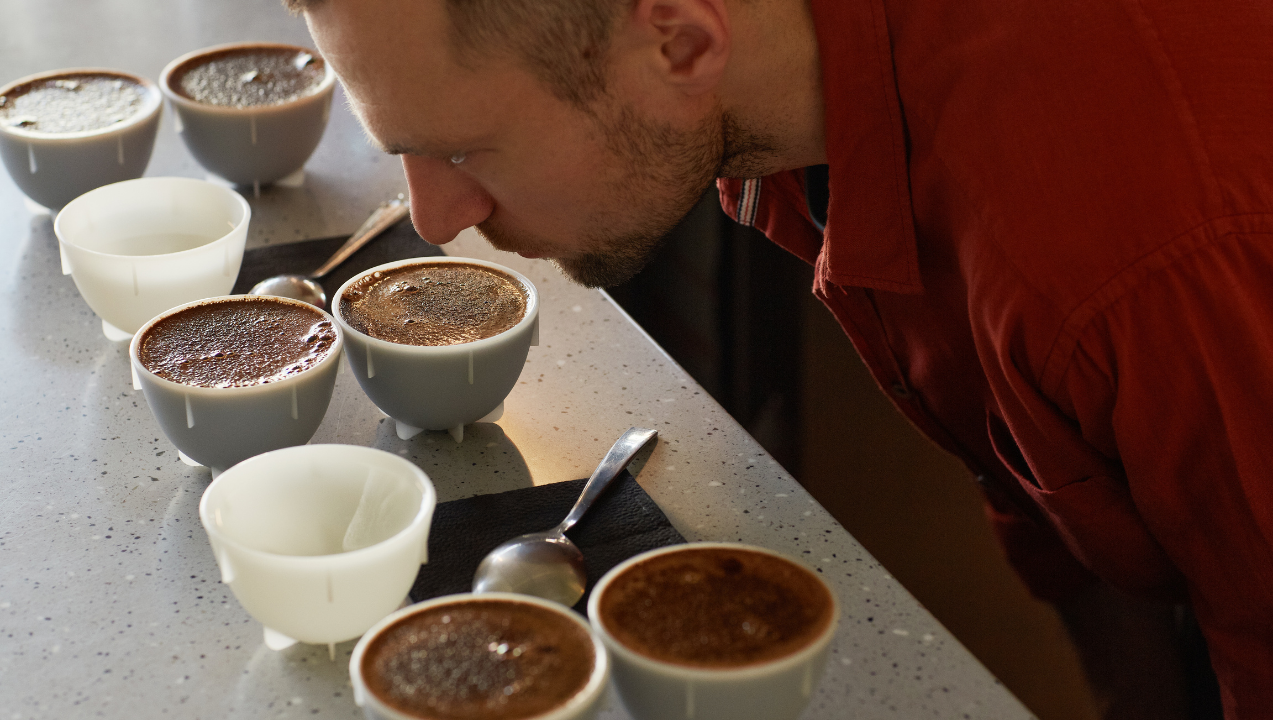
Bring in fresh tasters. Not your team, not your co-founders, not anyone who's been sampling the product for months. Your actual target consumers, people who've never tried it before. Watch their reaction carefully. There's a real difference between "hmm, that's nice" and "oh, that's really good, what is this?" That difference is telling you something important about whether you've triggered wanting, not just liking.
Then look at two very specific groups: the people who bought your product once and didn't come back, and the people who kept buying. Talk to both. Ask the group that left what they liked, what they didn't, and specifically whether any of it related to taste. Ask the group that stayed what keeps bringing them back. The gap between those two sets of answers is almost certainly where your repeat purchase problem sits.
The third thing is to benchmark. Find a product with a strong, loyal following and taste it honestly alongside yours. It doesn't have to be a direct competitor - it could be a fresh fruit, an actual meal, anything with that pull. The point isn't to copy it. It's to understand what that flavour experience delivers that yours doesn't. That comparison is worth more than almost any other exercise.
And finally, read your reviews. Every one or two star review that mentions taste, texture, smell, or any other sensory descriptor is a data point. If only one person says it, that's context. If several people say something similar, that's a signal worth acting on. They're trying to tell you something, just not always in the language of flavour science. Your job is to listen and translate.
Good isn't the goal. Craveable is.
The difference between a product that gets tried and a product that gets bought again comes down to one thing. The taste experience has to trigger not just liking, but wanting.
Consistency drift, a flavour that does the job without satisfying, functional notes that were never properly addressed. These are solvable problems. But you have to know which one you're dealing with first, and the only way to find that out is to go directly to your target consumers and be genuinely honest about what they tell you.
If you're building a new product and you want to make sure the flavour direction is right from the start - especially if you're working with a challenging functional base - the Choose Package is where we do that work together. It's not about picking a flavour from a catalogue. It's about understanding your specific base and finding the direction that will make your consumers want to come back for more.
Book a discovery call if you'd like to talk it through.