Why Free Flavour Development Is Costing You Thousands (And What to Do Instead)
Jan 26, 2026
Today I want to talk to you about something that sounds brilliant on paper but that can actually cost you thousands of pounds and months of wasting time and that is free flavour development.
If you are a food and drink business, chances are you worked with a flavour house or a contractor manufacturer before who offer free flavour development. Basically, they send you samples, you give feedback, they send you more samples, etc, etc.
And it doesn't cost you anything upfront, right? It sounds amazing. Who doesn't love having free stuff?
But this is what I learned from working with food and drink brands who have gone down that path. Free flavour development is actually not free. What I mean is, in a lot of cases, it ends up costing you far more down the line than if you have invested in a proper flavour strategy guidance from the beginning.
Okay, before I go any further, as a disclaimer, I worked for years in a Flavour House before, so I understand how they operate.
So what I'm sharing is not criticism at all. It's just insight, helping you understand how the industry works so you can make more informed decisions about what is right for you, your product, and your brand.
In this episode, I'm going to break down the hidden cost of free flavour development, when it makes sense to use it, and when you're better off taking a different approach.
What Free Flavour Development Actually Looks Like
Let's start with what a typical free flavour development journey looks like.
You contact a flavour house or a contract manufacturer. You ask them for vanilla flavour for your food or drink product. A few days or a few weeks later, you receive different samples. You taste them with your team. It's not quite right, you ask for more samples, and back and forth, and back and forth we go.
Before you know it, weeks have turned into months, and your launch deadline is going closer and closer. All of your teams are waiting, retailers are waiting, and you still haven't found the right flavour.
Does this sound familiar?
The First Hidden Cost: Time
The first hidden cost of this flavour development is, of course, time. And we know that time is money.
Here's the reality of how flavour houses work. And I can tell you because, again, I worked in one of them. They are businesses. And like any other businesses, they have to prioritise their resources.
Their biggest customers, the ones that place millions of pounds of orders, they get the dedicated account manager, the quick turnaround, the priority in the development process queue with the best box samples.
And again, that makes completely sense. This is how most business operates. So when I was working in the flavour house, I saw it first hand. The big customers got immediate attention and a lot of attention and a lot of resources. And the smaller brands, the start-ups, they were important, of course, but they were naturally had to wait for their turn and they had less resources dedicated to them.
And this is just a business reality where they have to keep their biggest client happy.
So when you are a small food and drink brand, if you're relying on this free flavour development from the flavour house or contract manufacturer or any other supplier, each round of samples may take longer than expected because you are fighting around their biggest clients. So this is why that turnaround sometimes can take longer than expected to receive the samples.
And if you have to delay your launch the cost of that is enormous. Every month, you're not on shelf. It's a lot of revenue. You also have your brand image and your reputation with the retailers. You may lose market share. You may lose momentum.
And again, I'm not blaming the flavour house or the contract manufacturer, okay? I'm telling you so you know what to expect, especially if you are a start-up or someone that is creating their food and drink business.
The Second Hidden Cost: Generic Flavours from a Library
The second hidden cost is that free flavour development typically means they are going to work from their existing flavour library and they are not going to make a bespoke one just for you.
And I completely understand why. When I was working in the flavour house, I saw how long it takes the flavourists to create not only one bespoke flavour, but a few different bespoke flavours so you have different flavour profile. It takes time, expertise, multiple trials, and a lot of different resources.
So flavour houses have an extensive flavour library. And sometimes it can have hundreds and hundreds of flavours in there.
And this is what I was doing when I was working in the application team is I was going to the flavour library for some customers, smelling a few strawberry flavours, for example, and just decided which one I will go for, try them in the application, whatever it was, muffin or ice cream or cheesecake. And decide later on which flavour profile I will suggest to the client.
But bespoke flavour development, understanding your specific base and your ingredients, your brand positioning, your target consumers, creating all of this bespoke flavour profile from scratch, that level of work is for their biggest customers who are placing very large orders. Because that's what funds that level of service.
And usually flavour houses and contract manufacturers will have someone that is dedicated to send flavour library samples directly to customers. So that person sometimes doesn't even have time to try in the application. They won't have time to try in your base with your ingredients and your process.
Sometimes it's just a matter of looking at a software or spreadsheet and see the evaluation of the flavour in other applications, smelling the samples, have a look sometimes if you can at the formulation and understand the requirement and send the samples without actually tasting it in the application.
And that was the problem with most of my clients who went to that route was they had very good flavours, but the flavours they received were not meant for their target consumers and their product.
So without that deep flavour strategy work, you are getting a lot of standard solutions. A lot of these flavours are core flavours, so they work really well in a lot of different applications. They have been proven that they work, they send you their core flavours, but it's just not tailored for what you try to achieve.
And here's the thing, good enough doesn't win in retail anymore. We know that flavour is the number one reason for repeat purchase. So not only you have to go on shelf, but you have to stay in shelf of the retailers.
The market is way too competitive. So if your product tastes okay, but they are not blown away, they're not going to buy it again.
The Third Hidden Cost: No Strategic Support
The third hidden cost is that free flavour development usually means it's sample only and you don't have any flavour strategic support.
And again, this is not a criticism of flavour houses or contract manufacturers. It's just the reality of what that free includes.
They will send you vanilla samples because you asked for vanilla. No question asked. They will send you different samples. They will understand your feedback. I send you more samples, but that's it.
But the deeper flavour strategic work, what I do, running workshops to identify your flavour blueprint, training your team on objective tasting, challenging whether vanilla is even the right choice for your base, that level of consultancy typically isn't included in that free development.
The Fourth Hidden Cost: IP and Formulation Ownership
Which means when you want to switch to another contract manufacturer, may not be able to take your product with you or you may have to reformulate from scratch.
And I've seen it with food and drink brands who just felt trapped because moving to a different contract manufacturer means starting all over again and that is an enormous hidden cost.
The Fifth Hidden Cost: Wasted Ingredients and Trials
And the fifth hidden cost is all of the wasting ingredients and trials. Every testing session is using your base ingredients. Every round of samples requires your team's time. You may be doing small production runs to test at scale.
So the more trials you do, the more ingredients you need, the more the cost is going to add up. And there is also the emotional cost, the frustration, the indecision, the feeling of being stuck and not knowing what to do and how to move forward.
Why I Work Differently
And this experience of working in a flavour house explained the way I work with my clients today. I saw first-hand how smaller brands will struggle to get the attention, the strategic support and the resources they needed from a flavour house or contract manufacturer.
And it's not because they didn't want to help them, of course, but it's just because of the business model they operate.
I also saw how much expertise goes into understanding flavour pairing, flavour matching, which flavour goes into which application, training. And I realised that smaller brands needed access to that expertise too, not just the big players.
So when I created my business, I designed it specifically for established food and drink brands who need that flavour strategy support and may not have huge volume yet. Food and drink brands that have launched plant-based or functional products with a challenging base and brands that need to get that flavour right because they can't afford to launch something mediocre.
And that's the gap I'm filling, the strategic guidance that flavour houses typically reserve for their volume customers.
When Free Flavour Development Makes Sense
Now, I want to be perfectly clear. Free flavour development is absolutely fine and it has its place. Flavour houses and contract manufacturers provide an incredible service to food and drink industry.
If you have a straightforward product with a neutral base and you just need a standard flavour, free samples works perfectly.
If you're making a simple lemonade and you need lemon flavour or extract, you probably don't need a strategy guidance, let's be honest.
If you have a strong R&D internal expertise, you know exactly what you're looking for, again, the free samples can work perfectly fine. You can evaluate the samples objectively and make quick decisions.
If you're planning to be a volume customer, if you're scaling very quickly and you will be placing large orders, you will naturally get more attention and support. The relationships change as your volume grows.
And if you have time and you're not under pressure to launch quickly, and I have no idea when that can ever happen, never came across that example before, but you never know, it can happen. And you can afford to go through that round of sampling, then again that free development can be perfectly fine for you and a sensible route.
When You Need Flavour Strategy Guidance
But this is when you may need to take a different approach.
You need flavour strategy guidance when you're working with a challenging base. I'm talking about plant-based products, functional ingredients, very high protein, because they all come with off-notes and need experts to understand the flavour pairing, how to mask this note or how to work with them.
You need it if you're launching a new brand where flavour is the key differentiator. You can't afford to get it wrong. The cost of launching a mediocre product, especially in retailer, is enormous.
You need it if you don't have internal R&D or sensory expertise. If your team is struggling to articulate what they are tasting and what needs to be changed.
And you definitely need it if you're trying to fix an underperforming food or drink product because before changing the flavours and trying to fix it you need to understand what is not working in the first place.
The Real Cost Comparison
So let's talk about the real cost comparison.
The free route looked like this. Months of back and forth with a flavour house or contract manufacturer. Your launch may get delayed. You may miss a retail opportunity. You finally launch with a flavour that is acceptable but is not great. Your repeat purchase rate is disappointing. Sales plateau. You start getting feedback that the taste is not quite right. And within a year, you're looking for reformulation.
Total cost, thousands in lost revenue, damage in retailer relationship, damage in your brand, wasted marketing budget on a product that people don't repurchase.
Instead, the flavour route looks like this.
You invest between £5,000 to £10,000 upfront in a proper flavour strategy. You get structured workshop, a clear flavour brief, extensive trials to get it right, and your team is trained on objective tasting. It's still going to take time and months, don't get me wrong, but you have a clear plan.
You launch with flavours that are strategically matched to your base, your brand and your target consumers. Your repeat purchase rate is strong. You get positive reviews. Retailers reorder. Your product actually performs.
The question isn't whether a strategic flavour work costs money. The question is, can you afford to get your flavours wrong?
If your launch timeline matters, if your retail relationship matters, if your repeat purchase matters, if your brand image matters, then this free option may actually cost you more money. Because what you save upfront, you will pay 10 times over in wasting time, lost opportunities and underperforming products.
What Does Flavour Strategy Work Actually Include?
So what does a flavour strategy work actually include?
First, understanding your base. What are the flavour characteristics of your base? What are the off-note we are dealing with? What flavour profile is going to complement or clash with those characteristics?
Secondly, understanding your brand and your target consumer. What's your positioning? What are your constraints? Your non-negotiable? What does your target consumers expect?
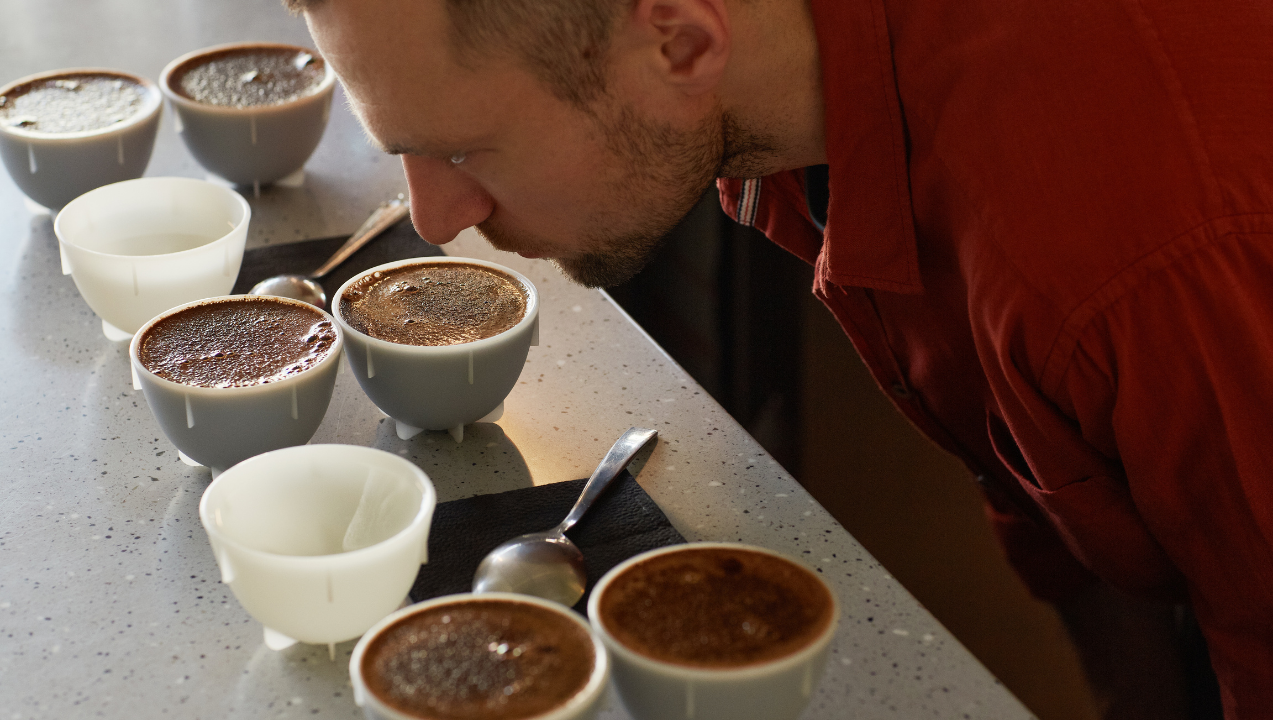
Third, a structured workshop to identify your flavour blueprint. This means tasting actual benchmark products strategically to understand which flavour profile fits your base and your brand.
Fourth, extending trials. I've done 50, 100, almost 200 trials sometimes for a single project to find the right flavour combination because getting it right matters more than getting it fast.
Fifth, training your team on an objective tasting. Understand flavour characteristics so you can make confident decisions based on characteristics and not personal preferences.
And six, ongoing support through the entire process until you're launch ready. I don't just send you the samples and disappear. I'm partnering with you through your whole journey.
My Challenge For You
So here is my challenge for you.
If you're currently going through this free development route and it's taking months, if you're feeling frustrating and stuck, you're not getting the strategy guidance you need, it may be time to consider a different approach, okay?
And if you're about to start a new product development, before you automatically go down to the free route, ask yourself, can I afford to get it wrong? Can I afford the time it may take and the time I may lose? Do I have the internal expertise to make confident decisions?
Because free isn't always free. And that's the message of this episode. Sometimes the smartest investment you can make is getting proper strategy this report from the start.
If you're dealing with declining sales or harsh reviews and need to fix what's not working, my Fix package helps you diagnose the problem and rebuild your flavour profile strategically.
If you're launching a new product and need to choose the right flavour direction from the start, my Choose package gives you structured testing and clear strategy so you don't waste months guessing.
Book your free 30-minute consultation and let's talk about which approach is right for your product.